The Optimist’s Edge: Why Entrepreneurial Success Starts with a Sunny Outlook
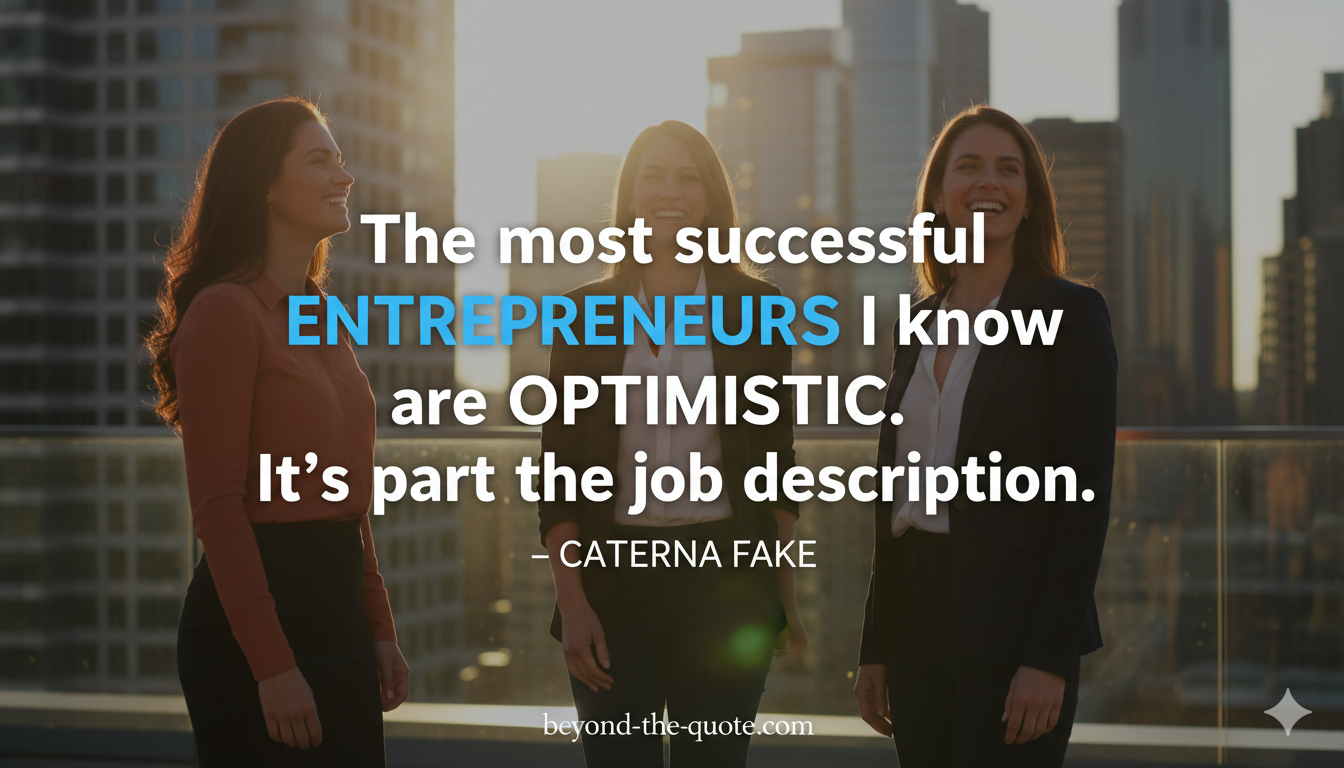
Ever wondered what truly separates the thriving entrepreneurs from those who just hope to make it? If you’ve been around the startup world for any length of time, you’ve likely heard the wisdom of industry veterans. One such gem comes from Caterina Fake, a highly respected figure in tech and the co-founder of agencies like Flickr and Hunch, who perfectly encapsulates a core ingredient for success: “The most successful entrepreneurs I know are optimistic. It’s part of the job description.”
It sounds almost too simple, doesn’t it? After all, building a business is famously tough. It’s a rollercoaster of late nights, unexpected setbacks, and the constant pressure of making payroll. So, why is optimism—that cheerful, can-do attitude—not just a nice-to-have personality trait, but an essential part of the job? Let’s unpack this powerful idea in a friendly chat.
More Than Just Wishing: Understanding Entrepreneurial Optimism
When Caterina Fake talks about optimism, she isn’t talking about blind faith or ignoring the massive challenges ahead. That would be naïve, and frankly, unsustainable. True entrepreneurial optimism is a practical tool. It’s the mental framework that allows you to look at a mountain of problems and see not an impassable barrier, but a series of solvable challenges.
Think about the last time you faced a major obstacle. Did you immediately throw your hands up, or did a little voice whisper, “Okay, how can I fix this?” That whisper, amplified and sustained, is optimism in action. For an entrepreneur, this mindset is crucial because failure is baked into the process. Products flop, funding rounds fall through, and competitors emerge out of nowhere. The optimist doesn’t pretend these things don’t hurt, but they possess the inherent belief that things can get better and that they have the agency to make them better.
This belief fuels resilience. It’s the engine that keeps you iterating after your tenth failed pitch or your eleventh bug report. It’s why they keep showing up.
The Ripple Effect: Optimism as a Leadership Magnet
A founder’s mindset doesn’t exist in a vacuum; it radiates outward, setting the tone for the entire organization. If the leader is constantly stressed, negative, or convinced that disaster is imminent, the team will mirror that energy. Morale plummets, risk aversion sets in, and innovation stalls.
Conversely, an optimistic leader inspires confidence. They attract top talent who want to be part of a winning, forward-moving culture. Investors are more likely to bet on a founder who exudes conviction, even when the numbers are temporarily soft. Optimism becomes a powerful form of internal and external marketing. People want to follow someone who genuinely believes the future they are building is worth the struggle.
To help keep your own mindset sharp and focused amidst the daily grind, having the right tools can make a difference. For those long days spent deep in strategic thinking or brainstorming, a comfortable and ergonomic setup is key. Taking care of your physical space can subtly support your mental space. Perhaps a high-quality ergonomic office chair would be a wise investment in your long-term well-being and focus. [Affiliate Product]

Optimism as a Catalyst for Action
One of the greatest dangers in entrepreneurship is analysis paralysis—getting so bogged down in potential negative outcomes that you never actually launch. Optimism cuts through this by focusing energy on possibility rather than probability of failure.
It allows an entrepreneur to embrace the “minimum viable product” (MVP) approach—launching something imperfect because they are optimistic that they will learn from the initial user feedback and rapidly improve it. They take the leap because they are optimistic about their ability to learn to fly on the way down.
This proactive stance is critical. Success rarely comes from waiting for the perfect moment; it comes from creating the moment. And creation requires a fundamental belief that your effort will yield a positive result.
Cultivating Your Own “Job Requirement”
So, if optimism is part of the job description, how do you “hire” yourself for that role if you feel naturally inclined toward skepticism?
It’s a practice, not a switch. Start small. When you encounter a problem, intentionally reframe it. Instead of “This marketing campaign failed,” try, “We just learned exactly what not to do in this channel, which gets us closer to what will work.”
Another way to support sustained mental clarity is through organization and knowledge retention. Keeping track of your small wins—the lessons learned, the positive feedback, the tiny milestones—builds a tangible evidence base for your optimism. A good, durable notebook and pen set can be surprisingly effective for this reflective practice, helping you literally write down your progress and maintain a running log of reasons to be hopeful. [Affiliate Product]
Remember, every successful business started as an idea that many people thought was impossible or foolish. The founders pressed on because, deep down, they were optimists about their vision. They weren’t immune to doubt, but their optimism was louder.
Finally, don’t forget the importance of learning from those who have already walked the path. Reading widely—not just about business strategy, but about the psychology of success—can reinforce the belief that your struggles are normal and success is attainable. A well-regarded biography of a disruptive founder can serve as both inspiration and a roadmap for navigating tough times. [Affiliate Product]
In the end, Caterina Fake’s quote is a beautiful reminder: being an entrepreneur means choosing to believe in a better future, even when the present is messy. It’s not fluff; it’s the fundamental fuel required to keep building when everything tells you to stop. Make that optimism your primary tool—it’s required for the job!
Affiliate Disclosure: This article contains affiliate links, which means that if you click on a link and make a purchase, I may receive a small commission at no extra cost to you. I only recommend products that I genuinely believe can be helpful in supporting your entrepreneurial journey.