The Audacity of Confidence: Decoding Helen Keller’s Most Powerful Quote
We live in an era of doom-scrolling, imposter syndrome, and an inexplicable fear of making phone calls. It is very easy to want to curl up into a ball and hide from the universe. But, there is a quote that has been floating around for decades that demands you do the exact opposite.
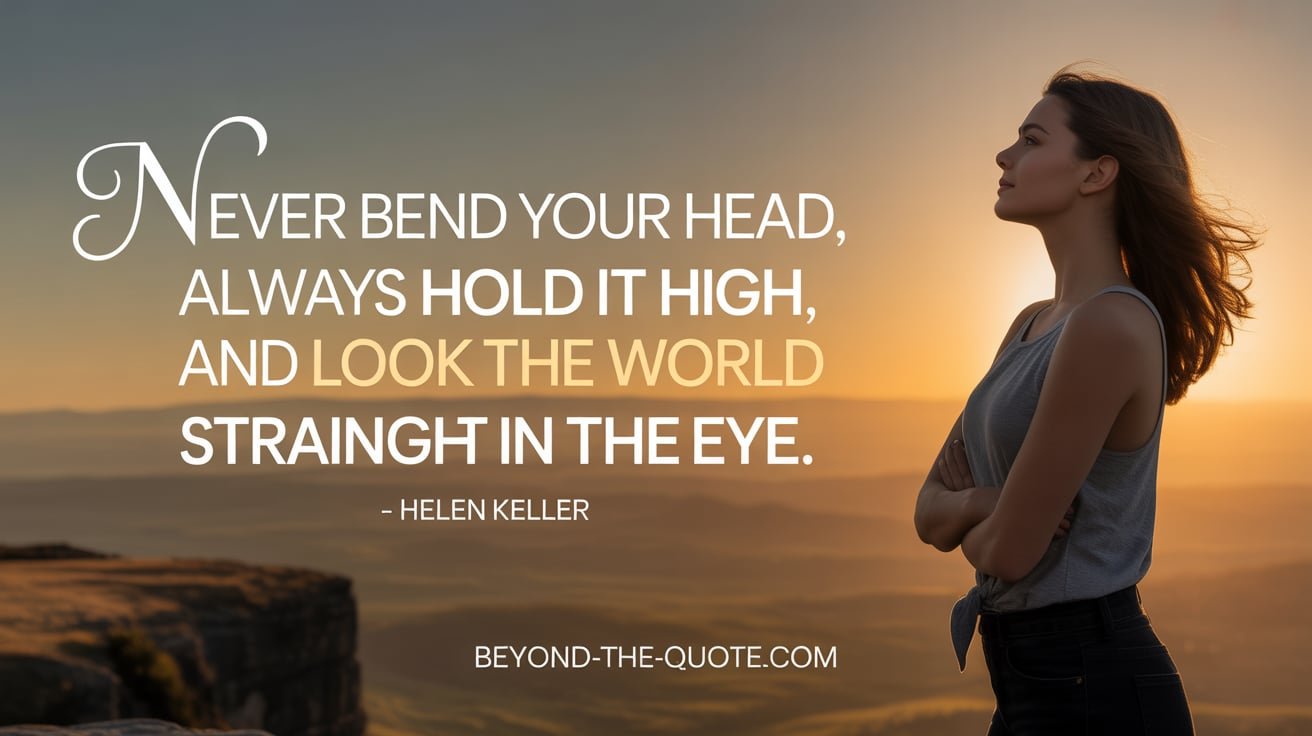
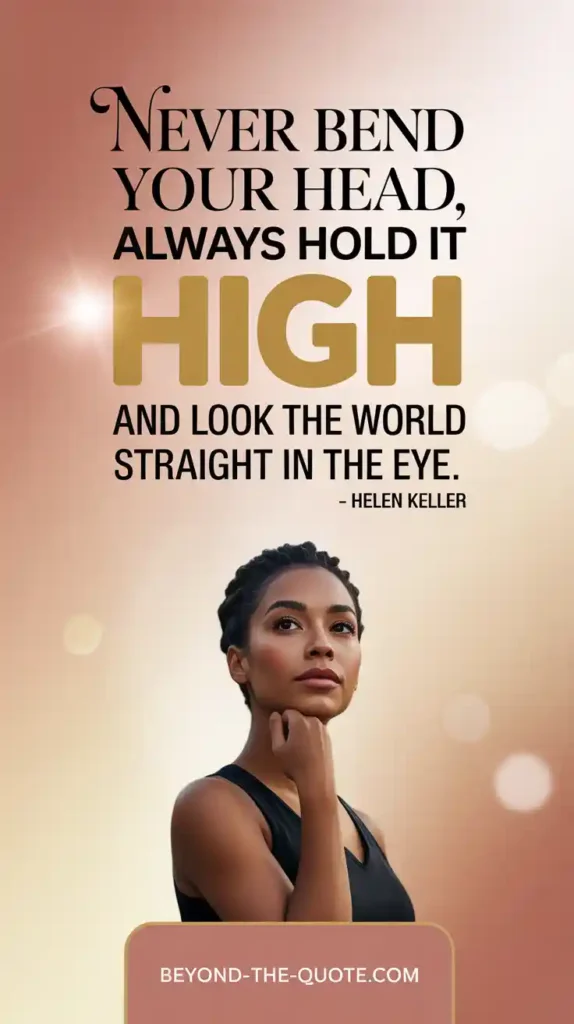
“Never bend your head, always hold it high, and look the world straight in the eye.”
This isn’t just a caption for an Instagram influencer’s selfie; it is a directive from Helen Keller. And if you know anything about Helen Keller, you know that when she gives advice on resilience, you sit up straight and listen.
But what does it actually mean to look the world in the eye when you’d rather stare at your shoes? Let’s break down the meaning of this quote with a little bit of wit and a lot of attitude.
Consider the Source: Why Context Matters
Before we dissect the words, we have to look at the speaker. Helen Keller was deaf and blind from the age of 19 months. She lived in a time when people with disabilities were often hidden away or pitied.
If anyone had a valid excuse to “bend their head” in defeat or hide from the world, it was her. Instead, she became a prolific author, political activist, and lecturer. When she says to “look the world straight in the eye,” she is speaking metaphorically about courage, because she literally couldn’t see the eyes she was looking into. That is a level of sass and strength that most of us can only dream of.
If she could face a world that was largely inaccessible to her with that much ferocity, you can probably handle that awkward meeting with your boss on Monday.
Amazon Affiliate Product Recommendation:
To truly understand the grit behind the quote, you have to understand the woman. Her autobiography is a masterclass in perspective.
- Affiliate Product: The Story of My Life by Helen Keller
“Never Bend Your Head”: The Anatomy of Shame
Let’s look at the first part of the quote: “Never bend your head.”
Biologically, humans bend their heads for two main reasons:
- We are looking at our smartphones (tech neck is real, folks).
- We feel shame, submission, or defeat.
When you lower your chin, you are protecting your neck—your most vulnerable spot. It is a primal signal to the predator (or the critic) that says, “Please don’t hurt me, I surrender.”
Keller is telling you to stop apologizing for your existence. Bending your head is an act of making yourself smaller. It’s admitting that the world has beaten you. The quote suggests that resilience starts with physiology. You cannot feel brave while you are staring at the floor.
“Always Hold It High”: The Art of Faking It
The second part, “Always hold it high,” is the antidote to the first part.
This is the original “fake it ’til you make it.” There is actual psychological science behind this. It’s called “enclothed cognition” or “power posing.” When you physically posture yourself with confidence—chin up, shoulders back—your brain actually starts to believe you are confident.
Holding your head high signifies pride. Not the arrogant, “I’m better than you” kind of pride, but the self-respecting “I have a right to be here” kind of pride. It is a refusal to be crushed by circumstances.
However, we know that years of sitting at a computer desk can make “holding it high” physically difficult. Sometimes, you need a literal reminder to stop slouching.
Amazon Affiliate Product Recommendation:
If your spirit is willing but your spine is weak, a little physical help goes a long way in correcting that “defeated” posture.
- Affiliate Product: Posture Corrector for Men and Women (Adjustable Upper Back Brace
“Look the World Straight in the Eye”: The Challenge
Here is the kicker: “Look the world straight in the eye.”
Eye contact is intense. It is intimate. It creates a connection. When you avoid eye contact, you are evasive. When you lock eyes, you are challenging the other person (or the universe) to acknowledge you.
To look the world in the eye means to confront reality. It means acknowledging your problems, your debts, your fears, and your dreams without flinching. It means not living in denial.
- The Coward’s Way: Ignoring the problem and hoping it goes away.
- ** The Helen Keller Way:** Staring the problem down until it blinks first.
It is about agency. You are not a passive observer in your life; you are the main character. Main characters do not look at the floor; they look at the camera.
How to Apply This to Modern Life
Okay, so we aren’t all fighting for disability rights in the early 20th century. But we have our own battles. Here is how to use this quote today:
- ** The Zoom Call:** When you are presenting, look at the camera, not at your own face in the corner of the screen. Assert dominance over the Wi-Fi connection.
- ** The Mistake:** So you messed up at work. Don’t slump. Walk into the office (or Slack channel), admit the error, fix it, and move on. Bending your head implies guilt; fixing it implies competence.
- ** The Bad Day:** Sometimes the world just punches you in the face. It’s okay to cry, but do it with your head up. It’s better for your sinuses anyway.
Conclusion: The Power of Posture
Helen Keller’s quote isn’t just about body language; it’s about a mindset of defiance. It is a refusal to let the world tell you who you are or what you are worth.
It is a simple formula for a happy life: Refuse shame (never bend your head), practice dignity (hold it high), and confront reality (look it in the eye).
So, the next time you feel small, remember: If a woman who could neither see nor hear the world insisted on staring it down, you have absolutely no excuse. Chin up.
Amazon Affiliate Product Recommendation:
Sometimes you need a place to vent your frustrations so you can go back to facing the world with a smile. A good journal helps you process the chaos so you don’t have to carry it around.
- Affiliate Product: UrBestSelf “The 6-Minute Diary” – Gratitude Journal & Planner
Affiliate Disclosure:
This article contains affiliate links. If you purchase a product through one of these links, I may receive a small commission at no extra cost to you. This helps support the creation of content (and keeps my head held high).