The Power of Ascent: Unpacking Ruth Bader Ginsburg’s Vision: “As women achieve power, the barriers will fall.”
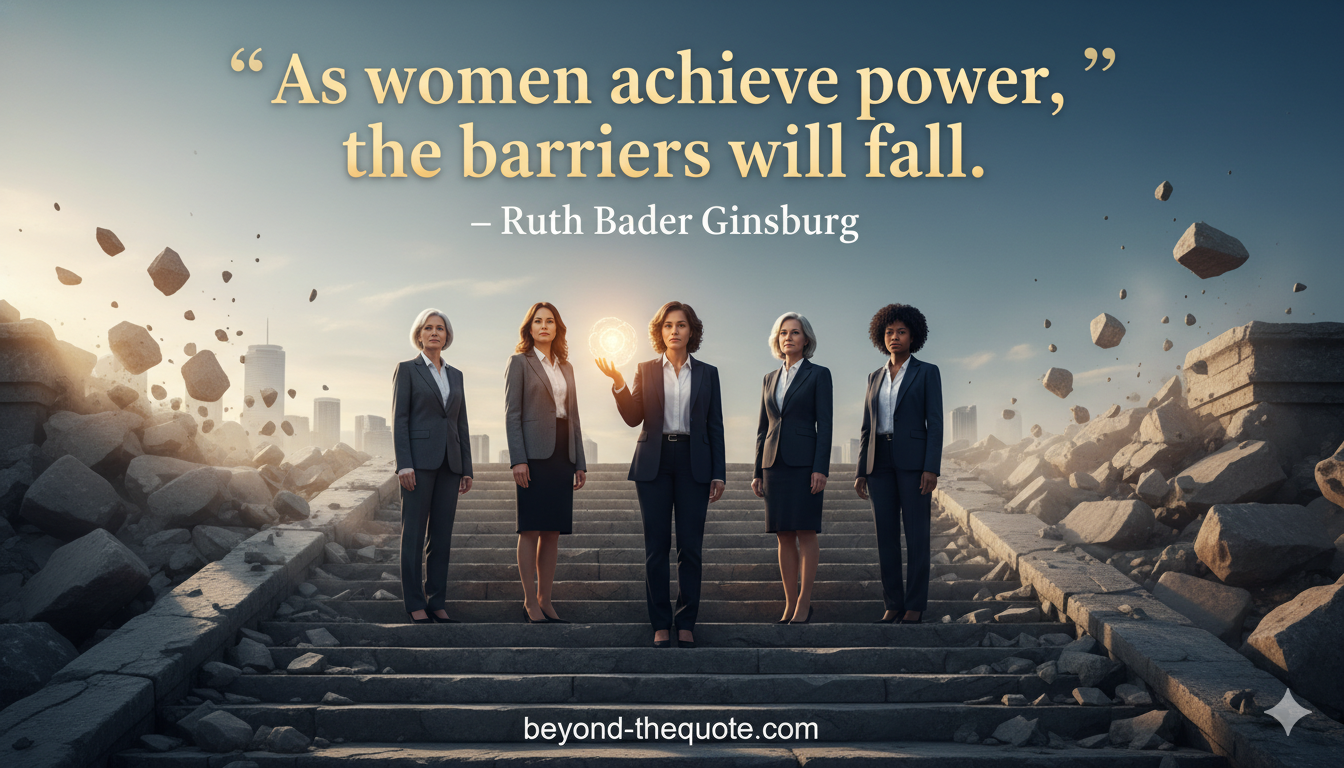
Ruth Bader Ginsburg—a name synonymous with justice, tenacity, and groundbreaking legal reform—left the world with a legacy etched in precedent and powerful words. Among her most resonant is the seemingly simple yet profoundly complex statement: “As women achieve power, the barriers will fall.”
What exactly did this titan of the Supreme Court mean? It’s more than just a hopeful slogan; it’s an observation rooted in lived experience and a strategic blueprint for societal change. Let’s unpack this brilliant insight in a friendly, accessible way, exploring how the accumulation of female power—in all its forms—is the essential catalyst for dismantling the obstacles that still stand in the way of true equality.
The Architecture of Barriers
To understand the solution, we first need to acknowledge the problem: the barriers. These aren’t always visible brick walls; they are often subtle, systemic, and deeply ingrained. Think about the glass ceiling that prevents the highest promotions, the pay gap that still plagues nearly every industry, or the lack of affordable childcare that forces many talented women out of the workforce. These barriers are built, consciously or unconsciously, by systems designed when a different demographic held the keys to decision-making.
For generations, the rules of the game—in boardrooms, courtrooms, and government halls—were written primarily by men. And while many of those rules were fair, others inherently favored the experiences and priorities of those already in power.
Power as a Lever for Change
RBG’s quote suggests a dynamic relationship: the achievement of power by women is not just an outcome of breaking barriers; it is the mechanism that breaks them.
When women gain positions of authority—as CEOs, judges, university presidents, elected officials, or even influential community leaders—they bring with them diverse perspectives shaped by their unique experiences. They don’t just sit at the table; they begin to redesign the table itself.
Imagine a corporate boardroom where, for the first time, women hold a majority of seats. Suddenly, issues like parental leave, flexible work schedules, and equitable hiring practices move from being “niche HR concerns” to central business imperatives. Why? Because the decision-makers now have a vested, personal stake in those policies. Their power acts as a lever, physically moving the heavy structure of established norms.
To help celebrate and support the women who are taking on these powerful roles, perhaps a beautiful, high-quality journal would be the perfect companion for brainstorming and strategy sessions. [Amazon Affiliate Link: High-Quality Leather-Bound Journal] This tool symbolizes the serious, dedicated work required to ascend to those positions of influence.

Redefining Leadership and Setting Precedents
The power RBG speaks of isn’t solely about the corner office. It’s also about cultural influence. When women achieve visible success, they become powerful role models, shattering limiting stereotypes for the next generation. Every time a woman wins an election, publishes a breakthrough paper, or leads a major corporation, she subtly shifts the cultural narrative about what is possible.
Moreover, when women in power make decisions, they are actively setting new precedents. A female judge is more likely to interpret discrimination laws through a lens that fully recognizes modern workplace realities. A female legislator is more likely to champion legislation focused on economic security for families. Each decision chips away at the foundational structure of the old barriers.
Building the Momentum: From Individual Success to Systemic Shift
The beauty of RBG’s observation lies in its compounding nature. As one barrier falls, the path becomes slightly clearer for the next wave of aspirants. As more women secure power, they create pathways and mentorship opportunities for those coming up behind them.
This creates a virtuous cycle:
- Achievement: A woman gains power (e.g., becomes a department head).
- Action: She uses that influence to reform internal policies (e.g., mandates transparent salary bands).
- Barrier Fall: The wage gap barrier narrows within that organization.
- Momentum: This success emboldens other women to push for similar changes elsewhere.
It’s a slow-burn revolution fueled by competence and conviction. For the contemporary professional navigating this ascent, tools that enhance focus and productivity are invaluable. Consider a high-rated noise-canceling headset to help block out distractions while tackling complex, high-stakes work. [Amazon Affiliate Link: Premium Noise-Canceling Headphones]
The Ongoing Work
RBG knew this wasn’t a passive process. The quote isn’t a promise that barriers will crumble on their own; it’s a statement of cause and effect, contingent upon women actively achieving that power. It requires relentless effort, often against resistance. It requires women to not only break in but to step up, speak out, and legislate, invest, and judge with wisdom and courage.
The final barrier, perhaps the most significant one, is often the one concerning representation in the very institutions that define our society. When the highest echelons of power reflect the full diversity of the population, the very concept of a “barrier” designed to exclude a segment of society begins to look outdated, illogical, and ultimately, unsustainable.
To fuel the long journey toward these powerful roles, comfort and good health are essential partners. A supportive ergonomic chair can make all the difference during those long strategy sessions or late nights preparing for a landmark case. [Amazon Affiliate Link: Ergonomic Office Chair with Lumbar Support]
Ruth Bader Ginsburg’s words serve as both a historical observation and a call to action. They remind us that real, structural change doesn’t happen by accident; it happens when those who have been historically excluded gain the necessary authority to redraw the map. As more women claim their seats at every table, the architecture of inequality, piece by piece, will inevitably fall away, leaving a more just and equitable landscape for everyone.
Affiliate Disclosure:
As an affiliate, I earn from qualifying purchases made through the Amazon links provided above. This means I may receive a small commission if you click on the product links and make a purchase, at no extra cost to you. I only recommend products I believe can genuinely support the modern professional in their journey.